
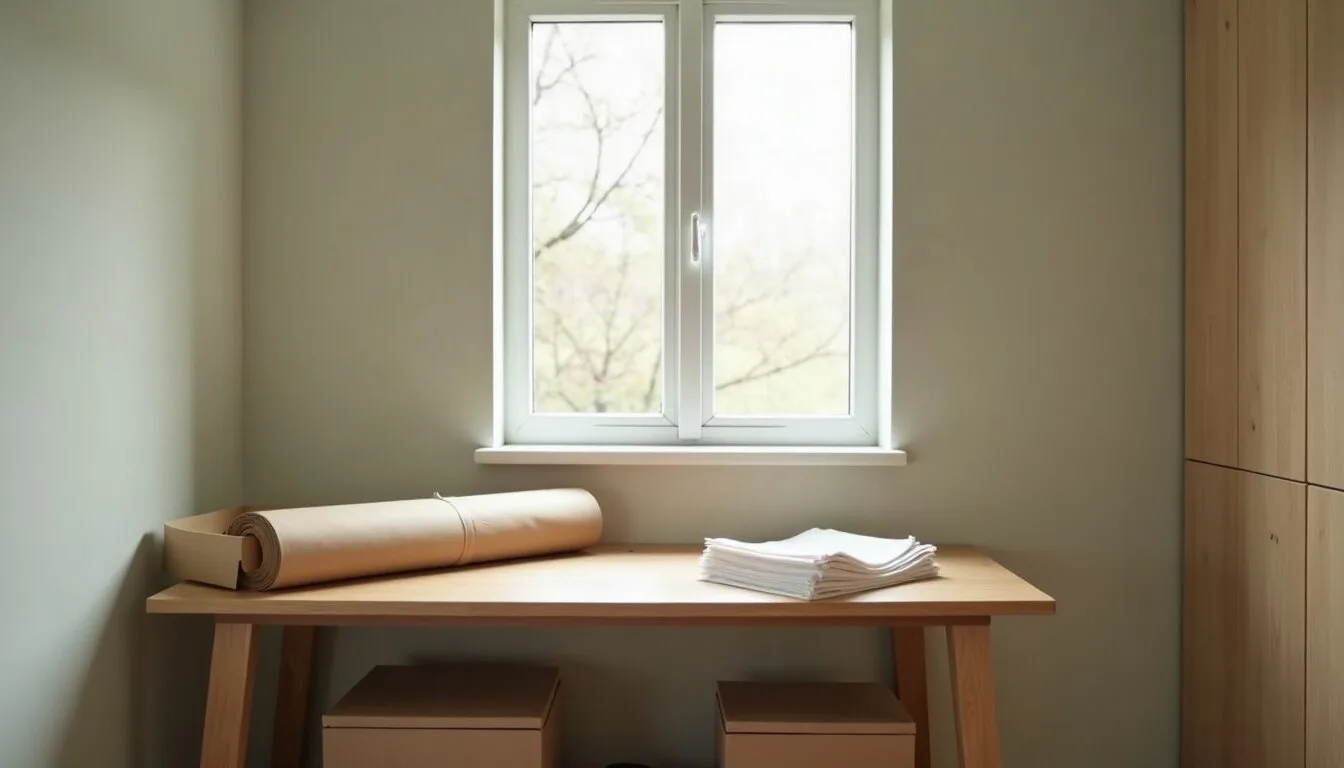
Picture the spare room on the morning it becomes a packing room. A folding table under the window, a stack of flat cartons against one wall, and walls that have not been touched in years: scuffed, patchy and a colour that makes the afternoon light look grey.
Painting is easiest before the stock moves in, so this is the moment to decide. If the walls or old cupboards need work, a local painter such as Front Range Painters Colorado Springs can talk the job through with you. This article covers what to sort, protect and plan so the room is ready for whoever packs there tomorrow.
Look at the room as a workplace first
Before choosing a colour, spend a few minutes using the room as it will be used. Put one ordinary order on the table, fold a carton around it and tape it. Notice where you stand, where the light falls and which wall your eyes rest on while you check the contents.
The walls nearest the bench matter most. They sit behind every label you read and every carton you inspect. A dark or uneven surface there makes small damage harder to spot and a long afternoon feel longer. The far wall, behind the shelving, matters less, because it will mostly be hidden by stock.
Note the old storage too. A spare room often comes with a built-in cupboard or a set of kitchen-style cabinets moved from elsewhere. These can become the room's most useful storage for tape, cushioning and spare mailers, but tired or sticky finishes on doors and shelves pick up dust and mark cartons.
Clear the room into three piles
Painting means emptying the room, which is a chance most small sellers never get twice. Use it. As you move things out, grade every item into three groups.
- Keep: cartons in good condition, unopened cushioning, tools you use every week.
- Reuse: boxes with sound walls but old markings, paper that can be flattened, bags that can hold returns.
- Dispose: crushed or damp cartons, torn mailers, tape rolls that no longer stick cleanly.
Store the keep and reuse piles somewhere dry and away from the work, such as a hallway cupboard or a corner of another room. Cardboard and paper soak up smells and moisture, so keep them out of the room while painting is under way and until it has aired. Take the dispose pile out of the house before the painter arrives.
Colorado Springs has dry air and strong sun for much of the year, with cold snaps in winter. Dry conditions are kind to stored cardboard, but a room that bakes in afternoon sun or chills overnight is worth noting, because heat and cold also affect tape and some label stock.
Choose the finish for the work, not the photo
The colour that looks best in a catalogue is not always the one that suits a packing room. Think about what the walls will need to do. Light, plain colours help light from the window spread across the bench. A finish that can be wiped helps, because walls near a packing table collect tape marks, smudges from cardboard and the occasional scrape from a carton corner.
These are questions to raise with the painter rather than decide alone. Ask what finish they would suggest for a room where cartons are handled every day, how it will hold up to wiping, and what preparation the old walls need. A good painter will explain the trade-offs rather than simply naming a product.
Cabinets deserve the same thought. If the room has old cupboards you plan to use for supplies, ask whether refinishing them is worth it compared with clearing and cleaning them. The answer depends on their condition and on how much you will use them.
| Area | Question it answers | Watch for |
|---|---|---|
| Wall behind the bench | Can I see damage and read labels clearly? | Glare from a very glossy finish, dark shades that dim the bench |
| Shelving wall | Will it stay clean behind stacked cartons? | Scuffs where boxes slide on and off |
| Old cabinets | Can supplies go in without picking up dust or marks? | Sticky or flaking surfaces inside the doors |
Plan the room before the paint dries
While the walls are bare, sketch the layout on a plain sheet of paper. Where will the bench sit? Which side do finished parcels go? Where do incoming deliveries land so they do not mix with outgoing ones?
This sketch helps the painter as well. If shelves will cover one wall entirely, that wall may need less attention. If hooks or rails are going up near the bench, mark them so you avoid drilling into fresh paint later. Anything electrical, such as moving an outlet closer to the bench or adding lighting, is work for a licensed electrician and should be planned before the walls are finished.
Keep the sketch. It becomes part of the handover for anyone who works in the room after you.
Bench card
- Grade everything into keep, reuse and dispose.
- Store cartons dry and away from the work.
- Agree finishes for the bench wall and cabinets.
- Sketch the layout before the paint goes on.
- Air the room fully before stock returns.
Let the room air before the stock returns
The tempting move is to carry everything back the day the painter leaves. Wait. Paper and corrugated board absorb smells readily, and a customer opening a parcel that smells of fresh paint will not know why. Ask the painter how long the room should air before you bring stock back, and follow that advice rather than a general rule.
When you do move back, bring the keep pile first, then the reuse pile. Put each item where the sketch says it goes, not where it used to be. This is the point where an old habit, such as a stack of flat cartons leaning against a wall, can quietly return. Shelves and closed cabinets protect the new finish and keep cardboard dust off it.
Check the walls once the room is full. Look for spots where carton corners rub and where your hand rests while taping. A small felt pad on a shelf edge or a bench positioned a little further from the wall can save a lot of scuffing later.
Write a handover for the next person
A freshly painted room tends to be well kept for a week and then drift. A short handover note helps it last. Write down where each type of supply lives, which shelf holds outgoing parcels, where returns go and how the walls should be cleaned if they get marked. Keep it to one page and pin it inside a cabinet door rather than on the new wall.
Whoever takes over the bench next, a family member, a part-time helper or you after a busy fortnight, should be able to open the room and know where things go without asking.
Add a line about anything left over from the job. If the painter leaves a small amount of touch-up material, note where it is kept and that it stays well away from stored cartons and cushioning. Note the finish and colour too, so a future touch-up matches rather than leaving a patch beside the bench.
A reset that fits the end of the day
Finish each packing session with a five-minute reset. Return tape and tools to their cabinet. Flatten and stack any reusable cartons on their shelf. Bag cushioning scraps for reuse or disposal. Wipe the bench and glance at the wall behind it for fresh marks.
Review the arrangement when the work changes: a new product line, a busier season or a second person packing. The room earns its place when you can describe the problem it solved, such as damage you now spot before a parcel leaves, or a wall that still looks clean after months of daily packing.