As an Amazon Associate I earn from qualifying purchases.
Rollo shipping scale with a separate display
Check price on Amazon US ↗Weigh bulky parcels with the display beside the box. Check the 110 lb capacity against your heaviest packed item and keep the platform level.
Rollo X1038 USB label printer
Check price on Amazon US ↗For a fixed Windows or Mac packing station using direct thermal labels. This is the USB model: check your driver, label size and software workflow before buying.
Scotch Heavy Duty tape with four dispensers
Check price on Amazon US ↗Four compact dispensers suit occasional packing and shared benches. Compare the roll length with your usage and test adhesion on your actual carton before standardizing it.
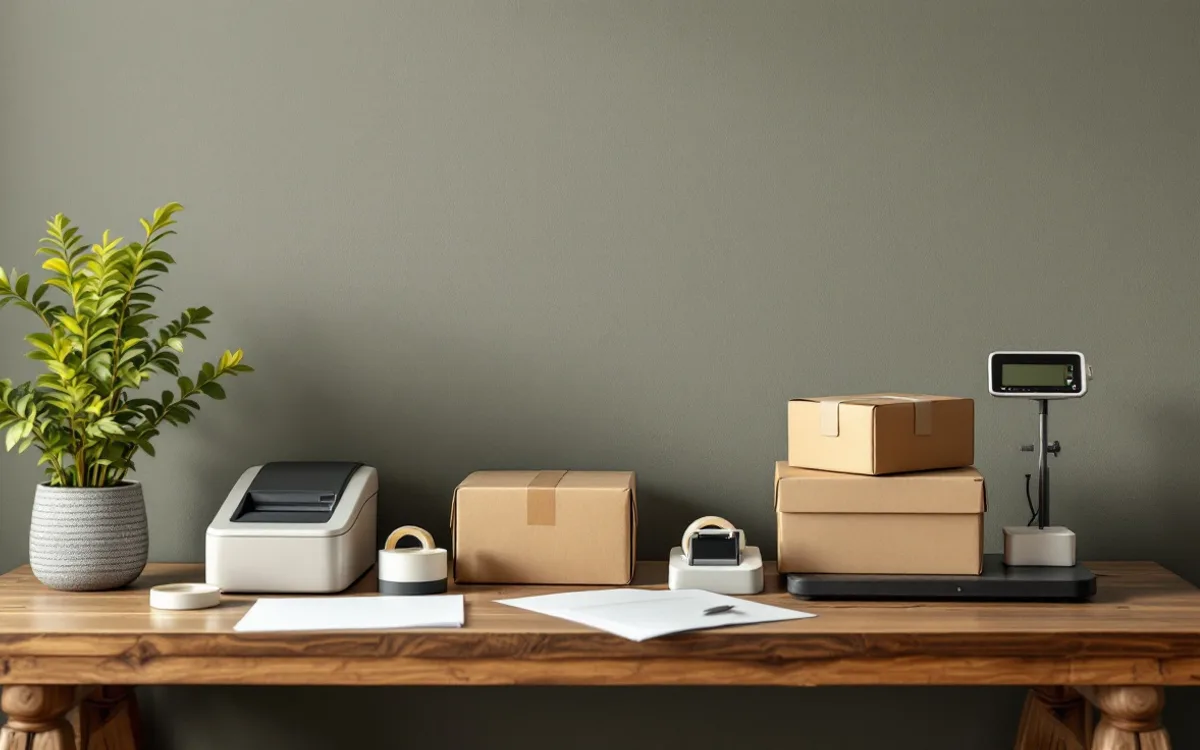
A packing station is easiest to design when it begins with a parcel rather than a shopping list. Put one ordinary order on a clear table. Follow it from the point where its contents are checked to the moment it is ready for collection. Every time you reach across the table, look for a tool or move the parcel aside, you have found a design question.
For a small operation, the aim is not to imitate a distribution centre. It is to make the next correct action obvious. A table, a reliable way to weigh a finished parcel, suitable materials and a readable label can form a workable system. More equipment helps only when it removes a problem that actually occurs.
Draw the journey before choosing the furniture
Give the parcel three places: waiting to be checked, being packed and ready to leave. These places can be marked shelves or trays rather than separate pieces of furniture. The important distinction is status. An open order beside a sealed parcel should not look like another item in the same unfinished pile.
Write down the handover between each place. Someone checks the order and moves it to the packing position. Someone closes the package and confirms its weight and dimensions. Someone verifies the label and moves it to the outgoing area. One person may perform every action, but naming the transitions exposes where a distraction could leave a half-finished job looking complete.
Keep returns away from this flow. A returned parcel might need inspection, a refund decision or a replacement item. It should not enter the same tray as an order waiting for its first dispatch. Even a clearly labelled empty box can provide a temporary returns area while you learn how much room is needed.
Measure the work, not just the empty table
Measure the largest parcel you regularly prepare with its flaps open. Then place the tools you need beside it. A table that comfortably holds the closed box may be awkward when you are adding cushioning or reaching for tape. Allow room for a label sheet or a separate scale display without putting either beneath the moving carton.
Height also deserves attention. People vary in reach and working posture, so there is no single bench height that this guide can prescribe. Try the actual packing movement before committing to fixed furniture. If the work includes heavy or awkward objects, seek appropriate handling guidance rather than solving the problem by lifting faster or placing the scale farther away.
For an existing desk, remove everything that is not part of packing for one short session. Use that temporary arrangement to discover which items need a permanent position. It is easier to move a tape holder after a modest trial than after building an entire shelving system around the wrong location.
Buy for the job in hand
As an Amazon Associate I earn from qualifying purchases. These links open Amazon US; check delivery and compatibility for your location.
Rollo shipping scale with a separate display
Weigh bulky parcels with the display beside the box. Check the 110 lb capacity against your heaviest packed item and keep the platform level.
Check price on Amazon ↗Keep a small, intentional materials range
A large collection of random boxes can make every order a new search. Begin with the few sizes that fit your common orders after allowing for the chosen protective material. Keep their internal dimensions visible in your own inventory notes. Measure the final outer dimensions separately when preparing a shipment.
The box allowance tool can help compare a proposed interior with the size of an item. It only performs geometry; it does not determine the protective performance of paper, foam or another material. A fragile object may need a packaging method supported by the carrier's guidance or a specialist supplier.
Store materials by function. Keep clean cushioning separate from scraps awaiting a decision. Put unsuitable cartons in a different area so nobody has to re-inspect the same damaged box on every shift. A small rejection pile with a clear disposal route is more useful than a large ambiguous pile labelled “maybe”.
Choose equipment around a specific obstruction
For a scale, the first question is whether the display remains readable with a normal carton on the platform. Capacity matters, but so do minimum increment, stability and the ability to return to zero. A detached display may solve an overhanging-box problem. It does not correct a platform sitting on an unstable surface.
For a printer, start with the software and label format you already use. Confirm the supported operating system, connection and consumables for the exact model. A fast printer that requires a manual conversion before every label may save no time overall. Our label-printer guide develops that decision in more detail.
A tape dispenser should control the roll comfortably and suit the tape width. Check the cutting arrangement and where the dispenser will rest between parcels. Avoid making a purchase on a claimed speed improvement alone. The packing shelf lists selection questions before retailer recommendations, so the requirement stays ahead of the product.
Put information where the decision happens
The order reference belongs at the checking position. The packing method belongs where cushioning is chosen. Collection details belong near the outgoing area. A single large instruction sheet can be harder to use than three short prompts placed at the relevant decision.
Keep customer information out of unnecessary photographs and public examples. If you take pictures to improve the layout, use blank labels or a made-up internal reference. A packing-process photograph does not need to reveal someone's home address. Keep any real shipping records within the systems and retention rules used by your business.
A useful bench card might say: check contents, select the method, close the parcel, measure the finished package, match the label, move to outgoing. That is a reminder of order, not a replacement for the specific packaging instructions required by the goods. Special contents need their own checked process.
Build the final check into the layout
Leave a clear place for the last check. At that point, the parcel should be sealed, the label should be attached and the order reference should still be available. Compare the parcel with the intended recipient and service before moving it to the collection pile. If an error appears, move it back to the working area rather than leaving a correction note on an otherwise ready parcel.
USPS's domestic package guide describes its preparation and sending process, including the need for accurate package information. Use the carrier's own current instructions for the service involved. This journal's layout suggestions do not replace its acceptance rules or the restrictions that apply to particular goods.
Keep the outgoing area visibly separate from incoming deliveries. A driver collecting parcels should not have to interpret a mixed stack. The same distinction helps if another person takes over the bench while you are away: status is visible in the arrangement instead of being held only in your memory.
Make one modest trial and keep useful notes
Try the arrangement with a small batch that represents ordinary work. Do not use only the easiest orders. Include a tall box, a small item and a parcel that needs a different material if those are normal parts of your business. Observe where you pause or put something down because its place is occupied.
Record a few concrete observations rather than a general impression. “Label roll blocked by an open carton” is actionable. “Bench felt inefficient” is not. If a change moves the problem elsewhere, keep that in the notes. The goal is a reliable arrangement, not a photograph of an empty table that looks organised.
Timing can help, but take care with interpretation. A faster batch may contain simpler orders. Compare similar work and include corrections in the total. Saving a few seconds while increasing label mistakes would be a poor trade. Our delivery scorecard guide explains the broader problem of defining a useful measure.
A reset that fits the end of the day
An end-of-session reset should be short enough to happen. Clear the active order, return tools to their places, check the next material supply and separate waste from reusable stock. Leave no sealed parcel with an uncertain status. If a job must wait, record what has been done and what remains.
Restocking is easier when the minimum supply has a visible meaning. You might keep one working roll and one spare, then replenish when the spare becomes the working roll. The appropriate quantity depends on your usage and replenishment time; a universal number would be misleading. The important part is having a trigger before the supply reaches zero.
Finally, review the arrangement after the order mix changes. A station built for clothing may become awkward when the business starts sending rigid gift boxes. The layout is a working tool, not a permanent achievement. Keep the flow clear, the checks visible and the purchases tied to a problem you can describe.
Equipment to match your next parcel
As an Amazon Associate I earn from qualifying purchases. These links open Amazon US; check delivery and compatibility for your location.
Rollo shipping scale with a separate display
Weigh bulky parcels with the display beside the box. Check the 110 lb capacity against your heaviest packed item and keep the platform level.
- Separate display with hold and tare controls
- 110 lb / 50 kg capacity; AC adapter or AAA battery power
Rollo X1038 USB label printer
For a fixed Windows or Mac packing station using direct thermal labels. This is the USB model: check your driver, label size and software workflow before buying.
- USB connection; no Wi-Fi or phone-only setup
- Direct thermal labels from 1.57 to 4.1 inches wide