
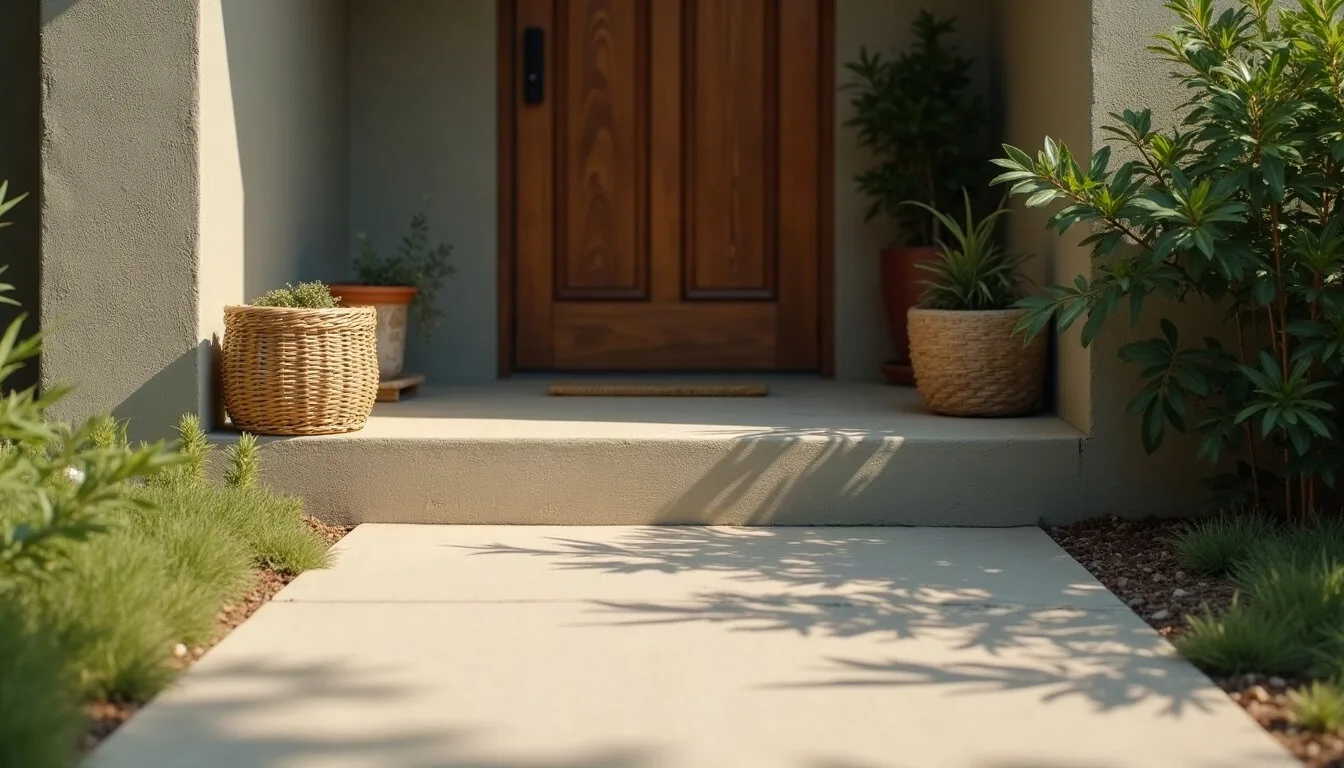
Follow one heavy parcel from the kerb to your door. The driver lifts it from the van, crosses a driveway with a lifted slab near the middle, steps around a crack by the garage and leaves the box on the only dry patch of the porch. Every delivery and every collection takes that same route.
If the driveway, path or steps need work before they suit that job, a local company such as GK Construction Solutions is one option for homeowners and small sellers around Nashville. This article is about the questions to settle first: what the route needs to do, what is needed now, and what can wait.
Walk the route the parcel actually takes
Start at the kerb, not at the front door. Walk the way a driver would, carrying something bulky in both hands, and note each point where you would hesitate. A step that is hard to see. A slab edge that catches a trolley wheel. A gap between drive and path where water sits after rain.
Then walk it the other way, as you would with an outgoing collection. Sellers who ship from home often wheel parcels out to meet a courier, or carry a stack to the car. The problems are usually the same ones, but the weight and the timing differ. A route that is fine for one envelope in daylight can be awkward for a loaded trolley at dusk.
Write the points down in order, from kerb to door. That list is the brief for everything that follows.
Ask what the route has to do
Before you speak to anyone about concrete, answer a few questions about the work itself. Get these written down before any quote.
- Do parcels arrive here, leave from here, or both?
- Does anything travel on wheels: a trolley, a sack truck, a cart?
- Where should deliveries be left when nobody is home?
- Is the route used after dark?
The answers shape the job more than the materials do. A seller who wheels parcels out every afternoon needs a level, continuous path more than a decorative edge. A household that mostly receives deliveries may care most about a covered, flat spot by the door. Name the job before you name the fix.
Separate needed now from nice later
Most driveways and paths have a list of faults. Not all of them matter for parcels. Sort them into two groups.
Needed now covers anything that trips a person, stops a wheel or holds water on the route: a lifted or sunken slab, a wide crack, a broken step, a low spot at the threshold. These affect every delivery and every collection, and some may point to a deeper problem.
Nice later covers the rest: a stained surface, a narrow edge, a patio extension you would like one day. Keep them on the list, but do not let them set the order of work.
Middle Tennessee gets humid summers, heavy rain and the odd freeze in winter. Ground that moves with wet and dry spells can shift slabs and open cracks over time. Whether a crack is surface wear or a sign of something underneath is a question for a contractor to assess, not one to guess at from the porch.
Choose the drop spot before the path
The route ends somewhere. Decide where. A parcel left on bare concrete in the rain sits in a puddle; one left against a door blocks it. Pick a spot that is level, out of the worst weather, visible from inside, and easy to describe in one short delivery note.
Once the spot is fixed, the path has a clear destination. That can change what the work needs to be. A slight widening near the door. A flat landing beside the step rather than on it. A drain point moved so water runs away from where boxes sit.
Test the choice before anything is built. Put an empty carton on the spot for a few days and watch what happens to it. Does rain reach it? Does it block the door? Can you see it from the window? If the answer to any of these is wrong, move the spot now, while moving it costs nothing.
| Drop spot | Suits | Watch for |
|---|---|---|
| Covered porch beside the door | Most deliveries, regular collections | Boxes blocking the door, water running off the roof edge |
| Side entrance or garage step | Heavier or bulky parcels | Visibility from the street, lighting after dark |
| Parcel box near the path | Small parcels when nobody is home | Size limits, a level and stable base |
Bring the list to the conversation
When a contractor visits, hand over the route list from the first section and the needed now group. Walk the route together, in the same direction a driver would. This keeps the conversation on the job rather than on whatever is most visible from the street.
Ask plain questions. What is causing this crack? Is it surface wear or something underneath? What does repair look like, compared with replacing a section? What will the route be like while the work is under way? How long before it can take foot traffic, and before it can take wheels?
That last pair matters for a home shipper. Plan a temporary drop spot and tell your regular carriers before the work starts. A short note on any delivery instructions you can set is enough. Check your carrier's own guidance for how to do that.
Bench card
- Walk the route from kerb to door.
- List every point where you would hesitate.
- Sort faults into needed now and nice later.
- Fix the drop spot before planning the path.
- Walk the route with the contractor, same direction.
- Set a temporary drop spot before work begins.
Keep the work zone apart from the parcel flow
Building work at home creates its own traffic. Materials arrive, waste leaves, and the usual route may be closed for a while. Keep two flows apart: the work and the parcels.
Clear a short, safe path that avoids the work area, even if it is less direct. Move the drop spot if needed. Keep outgoing parcels inside until collection time, not stacked by a door that workers are using. If you pack at home, keep cartons and cushioning away from dust and away from anywhere wet material is being handled.
Agree in advance where deliveries of building materials will go. A pallet left across the only clear path blocks every courier who comes after it. One short conversation at the start saves a lot of moving later.
Check it in the rain and after dark
When the work is done, test the route under the conditions that matter. Walk it after heavy rain and look for standing water near the drop spot. Walk it after dark and see whether each step and edge is visible. Wheel a loaded trolley over it.
This is the check people skip. A driveway that looks right on a dry afternoon can still hold a puddle at the threshold, or have a step that disappears at night. Note anything that bothers you and raise it while the contractor is still involved. Lighting is a separate trade; if the route needs better light, that is a question for an electrician.
Update your delivery notes once the route is settled. Remove anything that described the old workarounds.
Review the route when the work changes
Keep the route list. Look at it again when your shipping changes: more outgoing parcels, heavier goods, a new carrier, or a move from envelopes to cartons. A route that suits a few deliveries a week may not suit a daily collection.
Walk it once each season, especially after a wet spell or a freeze. Note new cracks early and keep the drop spot clear of leaves, planters and anything else that drifts there. The work earns its place when you can name the problem it solved: a driver who no longer stops at the lifted slab, and a parcel that waits for you dry.